
Which coffee beans should you choose for an automatic machine?
Choose whole coffee beans that suit your taste and your machine's instructions. Your fully automatic machine grinds each dose itself. For an everyday espresso, black coffee or cappuccino, a medium roast is a useful place to start.
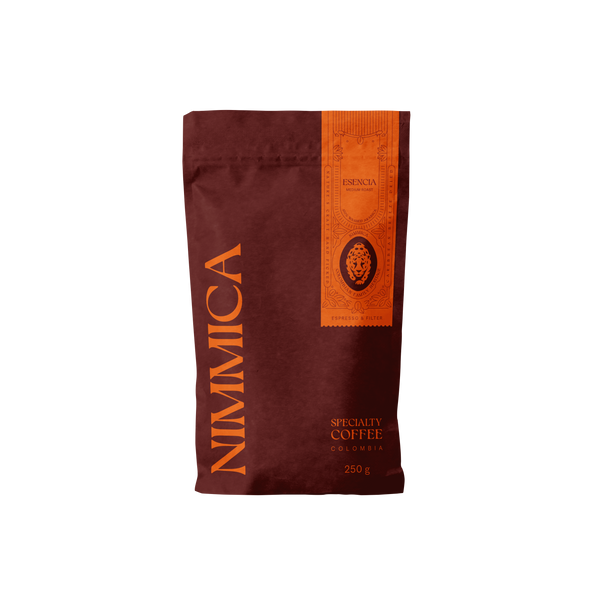
Our first recommendation is Nimmica Esencia: Colombian Arabica from Sierra Nevada de Santa Marta, roasted in Belgium, with notes of chocolate, walnut and dried fruit. Think of a familiar, rounded cup for the small pause before your day begins.
Three things to check before buying
- Whole beans. Select whole beans for the bean hopper. Ground coffee belongs only in a separate ground-coffee compartment, if your model has one.
- A flavour you enjoy. We suggest Esencia if chocolate and nut notes sound like your kind of coffee.
- The right quantity. Esencia comes in 250 g and 500 g bags. A 250 g bag is a practical first order; choose 500 g when it matches how much coffee you drink.
Do you need special beans for a fully automatic machine?
You do not need a separate species called “automatic-machine beans”. You do need roasted coffee beans your machine can handle. JURA, for example, specifies untreated beans and advises against beans with additives or caramelised coatings. Check the instructions for your own model before filling it. Read JURA's bean-container guidance.
Don't use a glossy surface as a shortcut for quality. Start with the roast and flavour description, then taste the coffee in your own machine.
How to adjust your coffee without getting lost in settings
- Start with your machine's standard espresso or coffee setting. Keep the cup size and strength unchanged for your first comparison.
- If the coffee tastes weak and flows quickly, try one step finer on the grinder. If it tastes too bitter, try one step coarser.
- Change one setting at a time. Give the machine the number of brews its manual recommends before judging a new grind setting.
- For a larger, lighter cup, try adding hot water to a brewed espresso instead of simply extending the extraction.
Grinder controls differ by model: some must be adjusted while running, others work differently. Follow your manual. JURA explains how grind affects water flow and flavour in its grind-setting guide.
Order Esencia for your machine
Open the Esencia product page, choose 250 g or 500 g, select whole beans and set the number of bags. Check your selection in the basket before checkout. You can see the current price on the product page.
Want to compare first? Explore our Colombian specialty coffee collection. Using another brewer as well? Our espresso, filter and French press guide explains which grind to choose.
Frequently asked questions
Can I use ground coffee in the bean hopper?
No. The bean hopper is for whole beans. Use ground coffee only through the dedicated compartment when your model supports it, following its instructions.
Is Esencia Arabica?
Yes. Esencia is Arabica coffee from Colombia. Its medium roast and chocolate, walnut and dried-fruit notes make it our suggested starting point for everyday coffee.
How many cups can I make with a 250 g bag?
Divide 250 by the grams used for each drink. At 10 g per drink, that is about 25 coffees; at 8 g, about 31. These are examples, not a promise: your settings and any coffee used while adjusting the machine change the total.
How should I store the beans?
Keep the bag well closed, dry and away from heat and direct sunlight. Refill the hopper as needed and buy a quantity that fits your routine.
One roast. Many moments.